Susana Balbo Became Argentina’s First Licensed Female Oenologist in 1981. Now Her Name Is a Wine — and a Hotel.
A stay at the Winemaker’s House, Mendoza.
 By Cynthia · 8 min read
There is a black door on a quiet street in Chacras de Coria, a small town twenty minutes from the center of Mendoza. No vineyard stretching to the horizon. No grand entrance designed to impress. Just a door, and what feels like an ordinary afternoon on an ordinary street.
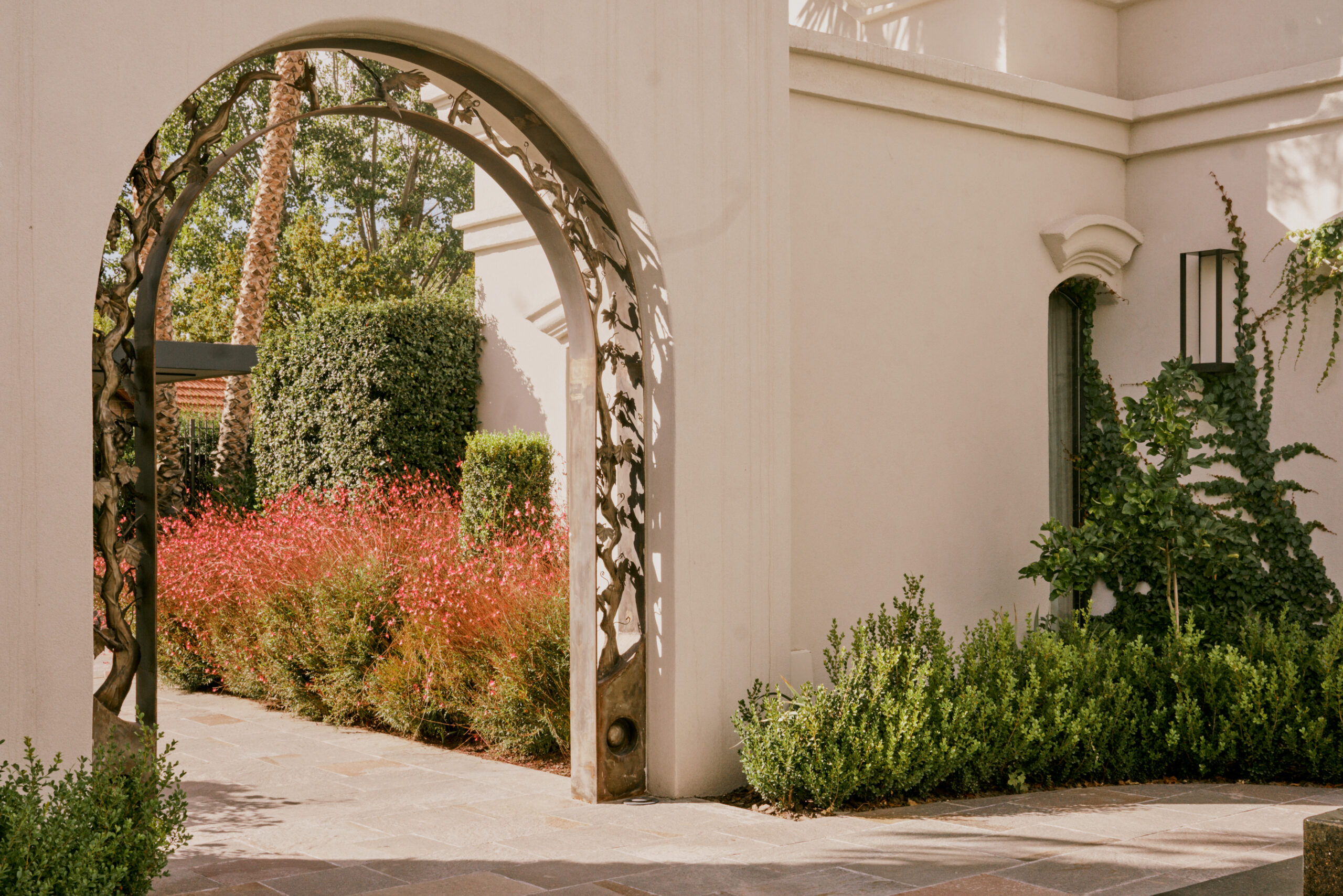
The grapevine — the tree most tied to the Balbo family — reimagined in Guillermo Rigattieri’s commissioned metalwork arches, tracing the vine from seed to fruit.
Then you step inside.
The first thing is the smell. Linden trees — enormous, old — line the path, and in summer their flowers fill the air with something calm and slightly sweet. Underneath that, herbs from the kitchen garden, lemon trees, the cool breath of a stone fountain in a Spanish-style courtyard. Before you have seen a single room, something in you begins to slow down.
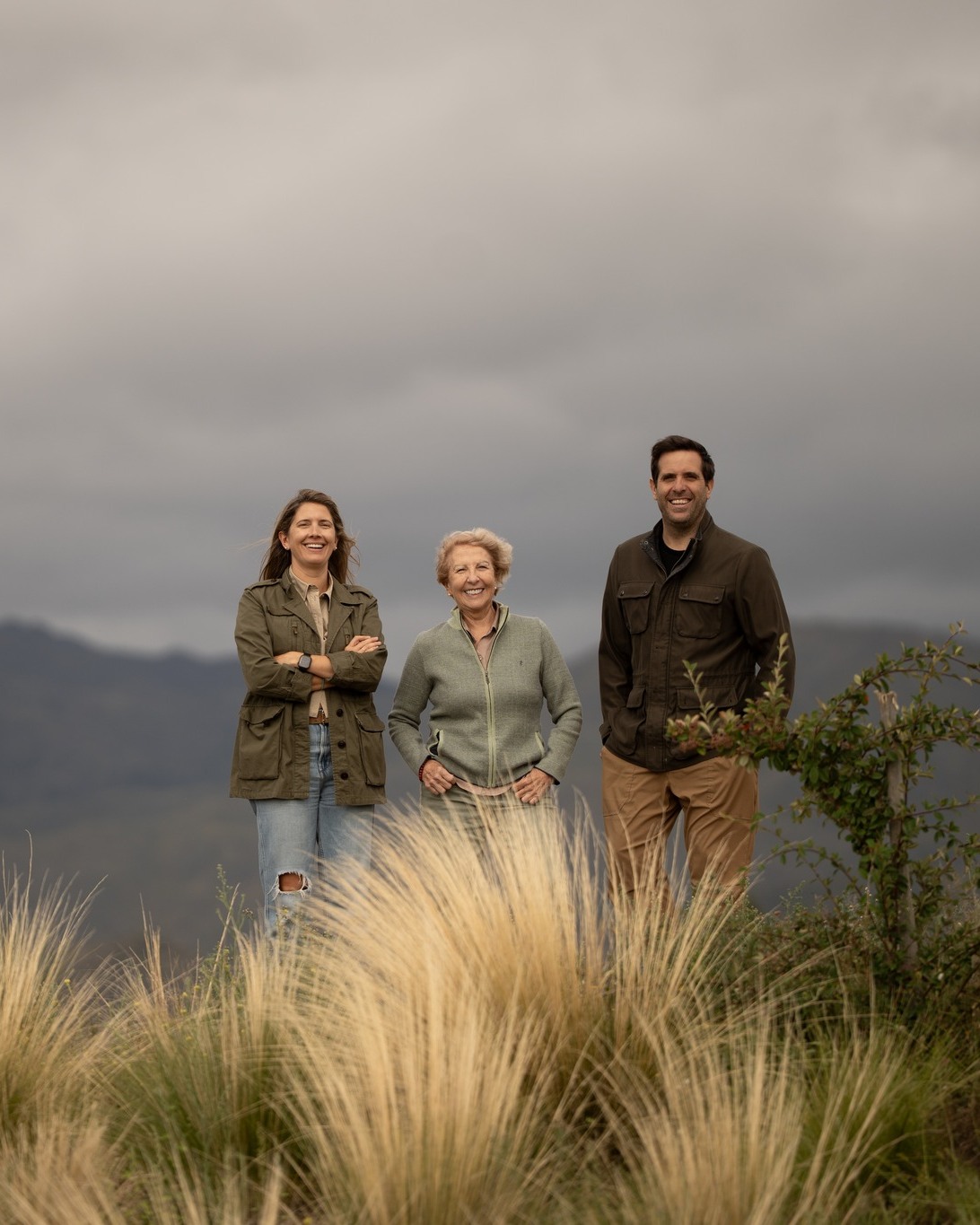
Susana Balbo with her children — Jose, who leads the winery, and Ana, who runs the hotel and restaurant.
I’ve spent years working in travel, and if there’s one thing I keep coming back to, it’s this: a place with a real story behind it changes you differently than a place that’s simply beautiful. Once you understand the why behind what you’re looking at, it stays with you.
Cynthia PolonskyThis is one of those places.
A legacy you can sleep inside
Susana Balbo founded her winery in 1999, after nearly two decades working across Argentina’s wine regions — including nine years in the remote highlands of Cafayate, in the northwest, where she transformed the Torrontés grape from a bulk varietal into something refined, aromatic and entirely Argentine. In 1981 she became the first woman in Argentina to graduate as a licensed oenologist, in an industry that, at the time, had little room for her. She went on to lead Wines of Argentina, the body responsible for introducing Argentine wine to the world at a time when most people couldn’t have placed the country on a wine map.
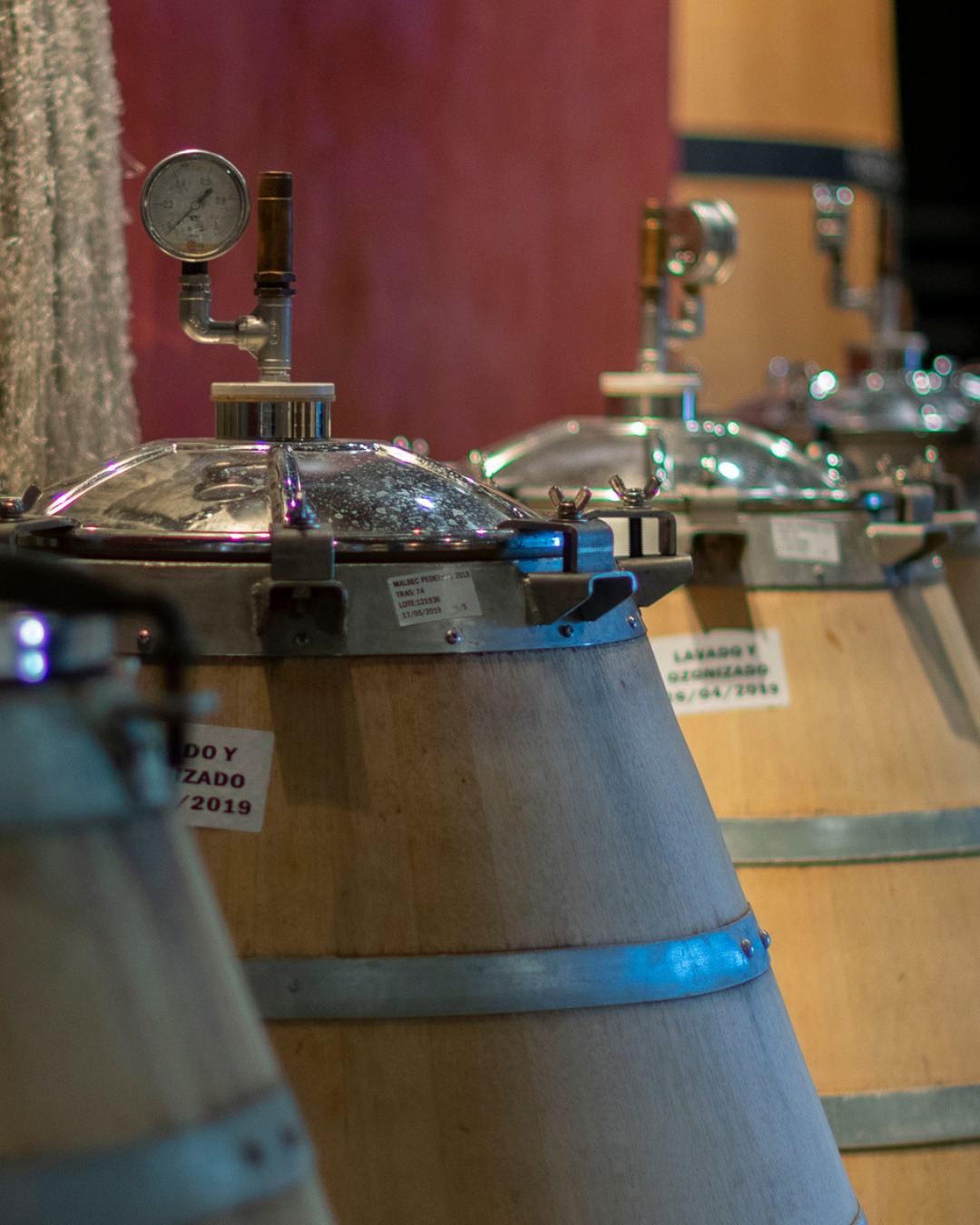
Barrels at the Susana Balbo winery, ten minutes from the hotel.
Her daughter Ana joined the business fourteen years ago. She opened a restaurant at the winery. Then a second one. Then, during the quietest months of the pandemic, she and her mother built a hotel — in the family’s own former home. People thought they were crazy. Two years later, it had two Michelin Keys.
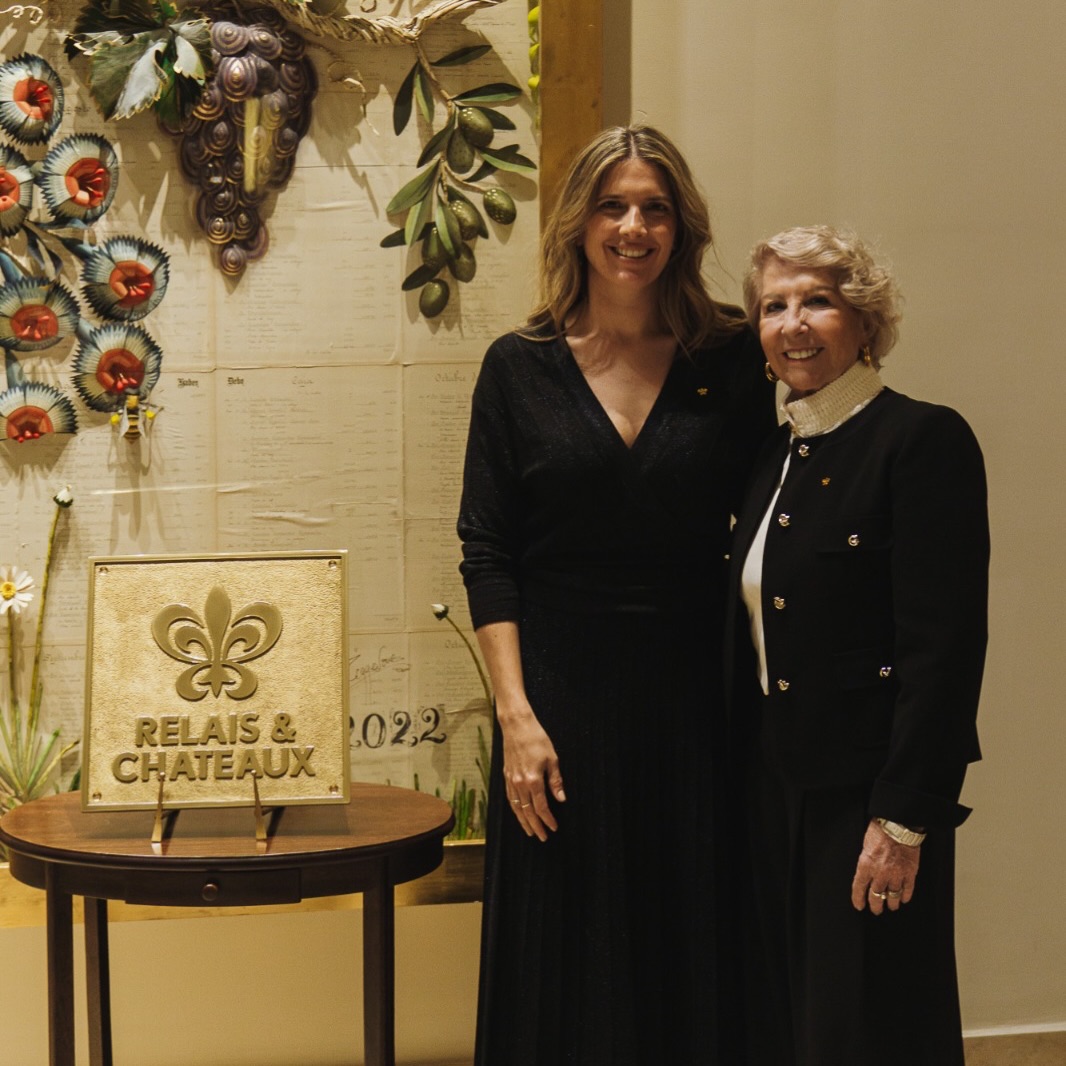
Susana and Ana, photographed beside the hotel’s Relais & Châteaux plaque.
The Susana Balbo Winemaker’s House isn’t a hotel that happens to be near vineyards, and it isn’t your home away from home either — it’s an invitation into theirs. Everything suggested, poured or placed in front of you has been chosen by people who live here, know everyone, and have no interest in showing you the safe, obvious version of Mendoza.
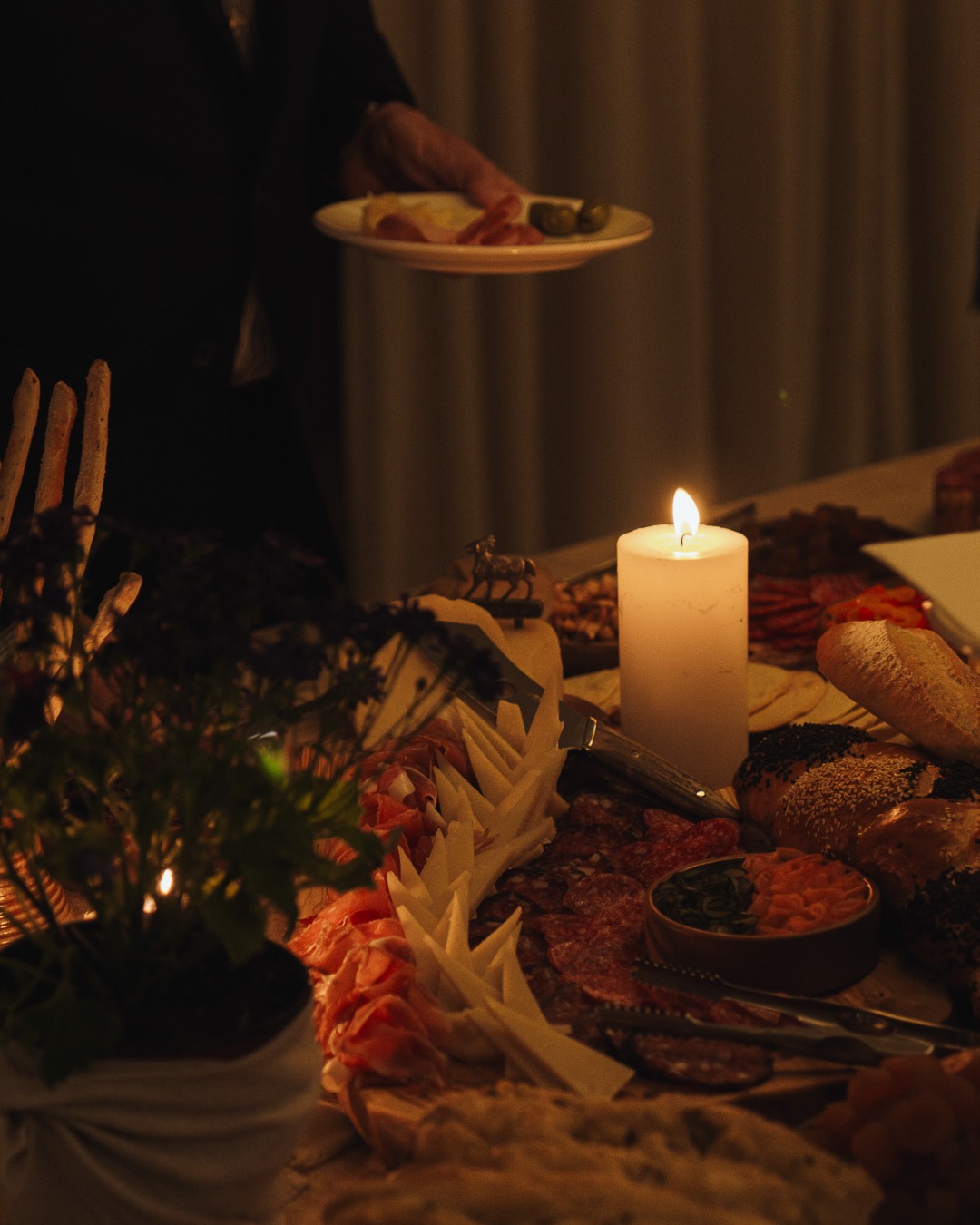
A table aglow, a gathering begins.
That extends to the table. The restaurant, La VidA, serves Argentine cuisine built around open fire, seasonal ingredients and cuts of beef chosen daily — but what sets it apart is the wine list, which includes bottles from producers across Argentina, not only Susana Balbo labels, each one chosen because someone at this hotel knows the person who made it. The seven-course tasting menu changes with the season and is more likely to pair a course with a crisp white from the high-altitude vineyards of Cafayate than the Malbec you were expecting.
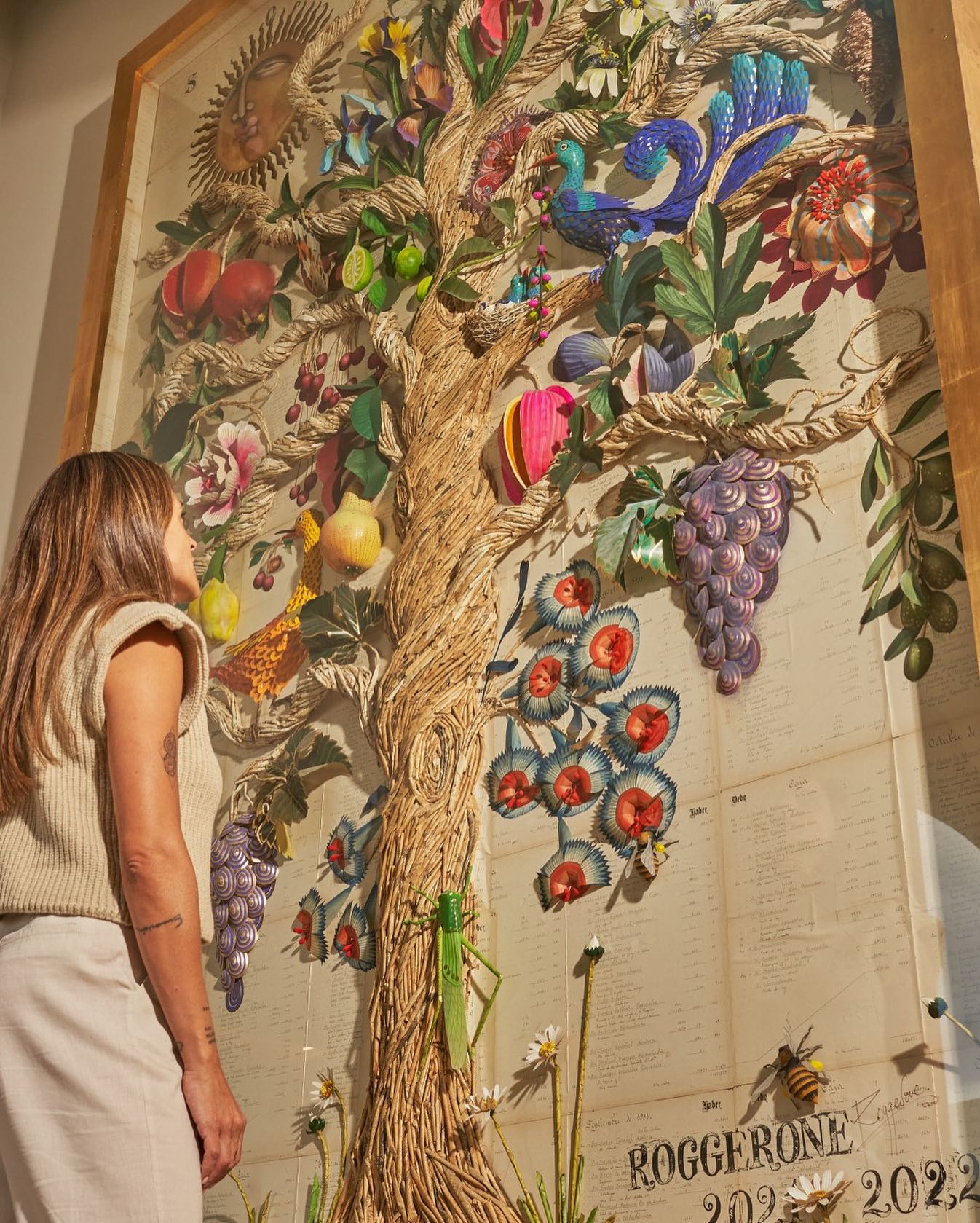
The Tree of Life — the concept behind each of the seven suites.
The seven suites are built around the concept of the tree of life — seven elements, seven rooms, each tied to something that roots a person to a place. It runs through the tasting menu, the wellness rituals, the art on the walls. And there’s a quiet play of language underneath it all: in Spanish, the word for vine is vid, and it lives inside the word vida — life.
On wine, and what Argentina has been hiding
If you’ve heard of Mendoza, you’ve probably heard of Malbec — the deep, full-bodied red that put Argentina on the international wine map in the early 2000s. It’s real, it’s good, and it’s only part of the story. Argentina also has thousands of kilometres of Atlantic coastline that almost nobody associates with the country, home to king crab and southern hake most travelers never hear about.
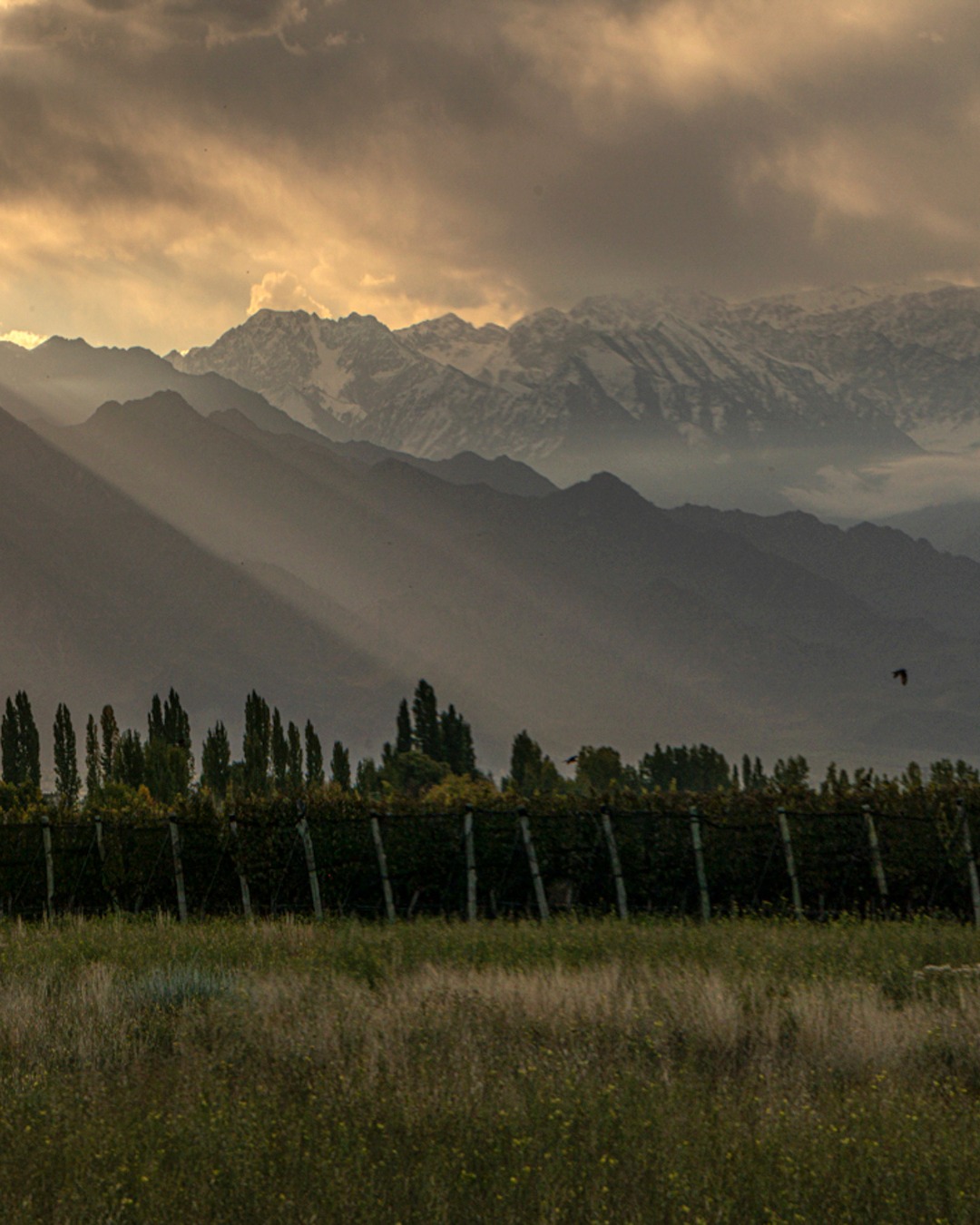
The Andes at dusk, seen from the vineyard — the light and altitude behind every bottle on the list.
Susana Balbo has spent decades pushing against that. Her winery produces close to fifty percent white wine — an almost unthinkable proportion for an Argentine producer. Ana calls it the white wine revolution: a belief that the high-altitude vineyards of the Andes are capable of producing white wines of genuine elegance, and that the world simply hasn’t been paying attention.
Staying here is one way to start paying attention.
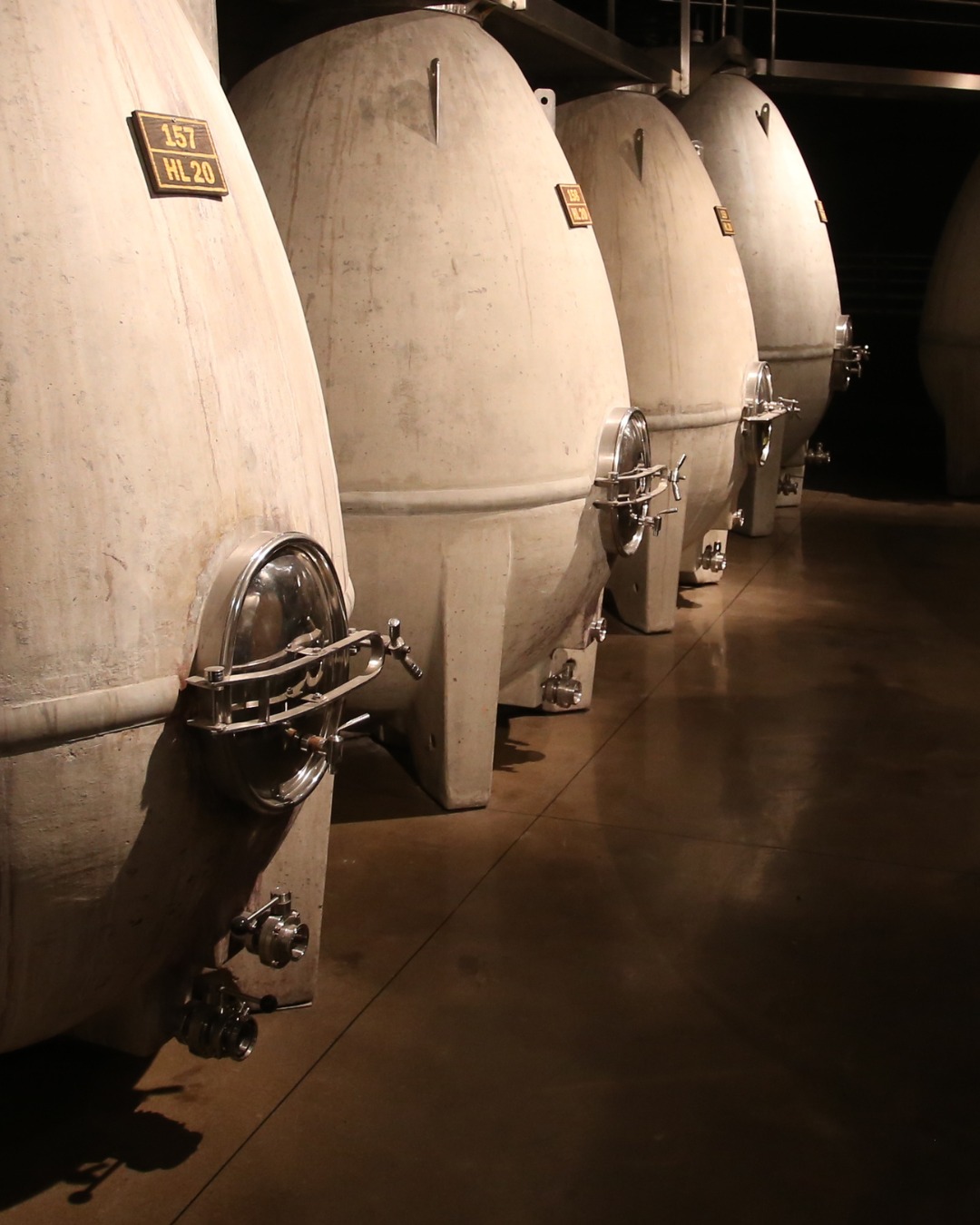
The concrete fermentation eggs at the winery — the same vessels, cut and repurposed, that became the suites’ bathtubs.
What you take with you
Mendoza mornings are cool and clear — a desert climate, which means the air at dawn is clean in a way that catches you off guard. By the time breakfast arrives, with its fresh-baked medialunas and the courtyard settling into the day, there’s a good chance you’ll have forgotten what city you came from.
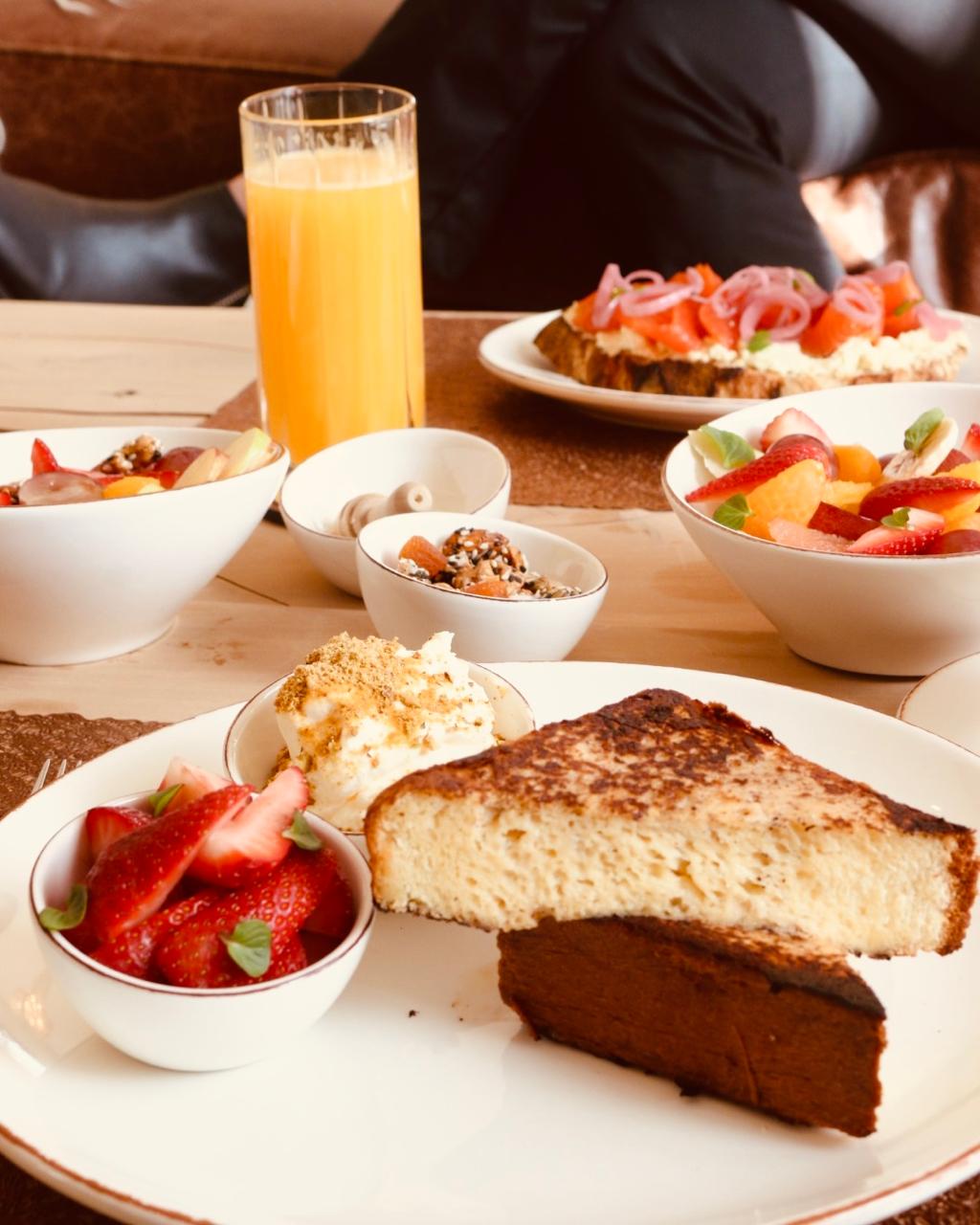
Breakfast, cooked to order every morning — medialunas and the courtyard settling into the day.
The Michelin Keys are there. The Relais & Châteaux membership is there. But what stays with most guests is quieter: the name of a small producer they’d never heard of, poured by someone who knows the winemaker personally. The feeling of having been somewhere genuinely thought about — not assembled for you, but made for someone, and generously shared. That’s the difference a story makes.
The Susana Balbo Winemaker’s House & Spa Suites is located in Chacras de Coria, Mendoza. susanabalbohotels.com
The spa is not a floor — it’s your room
Every suite has its own steam room, sensation shower, soaking tub and in-room massage table. Four of the seven also have a private dry sauna.
The bathtubs have a previous life
They were made from the concrete fermentation eggs used at the winery, cut and repurposed.
There’s someone whose only job is your wellbeing
The wellness butler designs your spa ritual around what you actually need that day. The signature treatment, Fruits of the Vine, runs three hours.
The wine fridge in your room was curated by Susana personally
Not a standard minibar — a selection.
The restaurant holds a Michelin Green Star
For sustainability, alongside the hotel’s two Michelin Keys and its Relais & Châteaux and Virtuoso memberships.
There are seven suites. The hotel doesn’t take large groups
A deliberate decision, not a limitation.
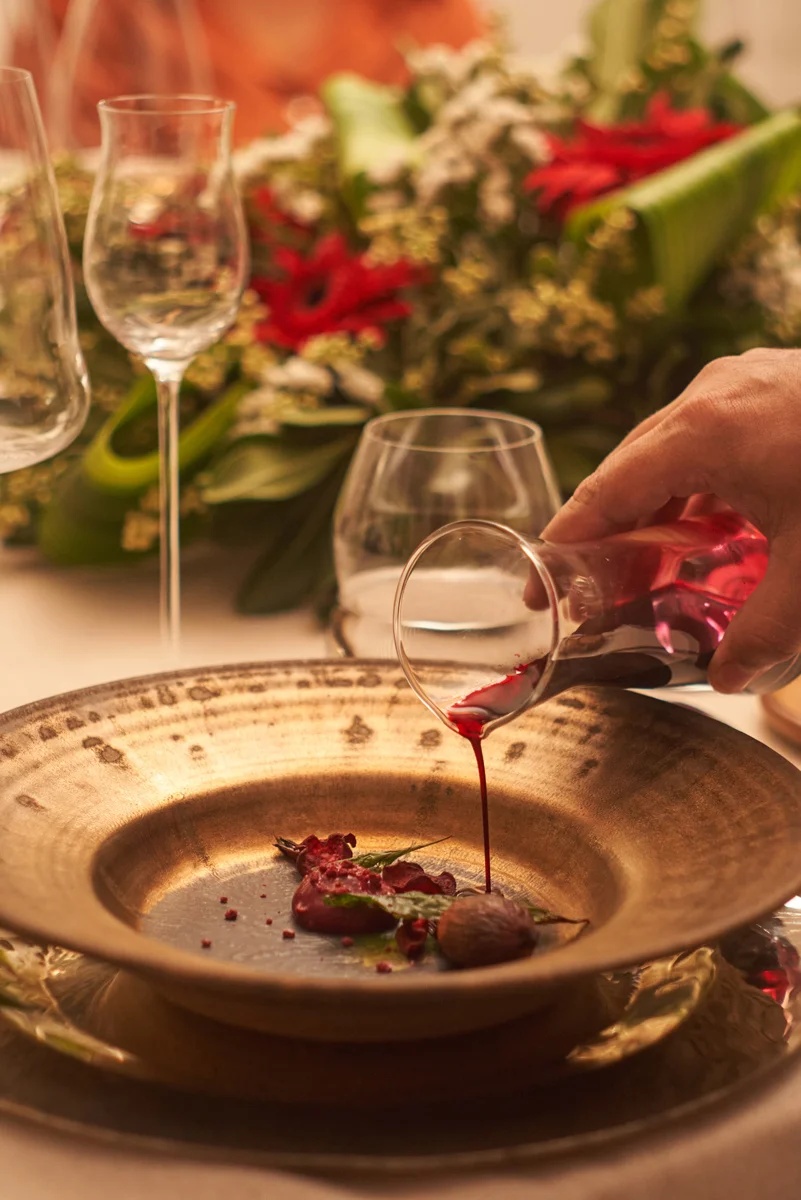
A course from La VidA’s tasting menu, wine poured tableside.
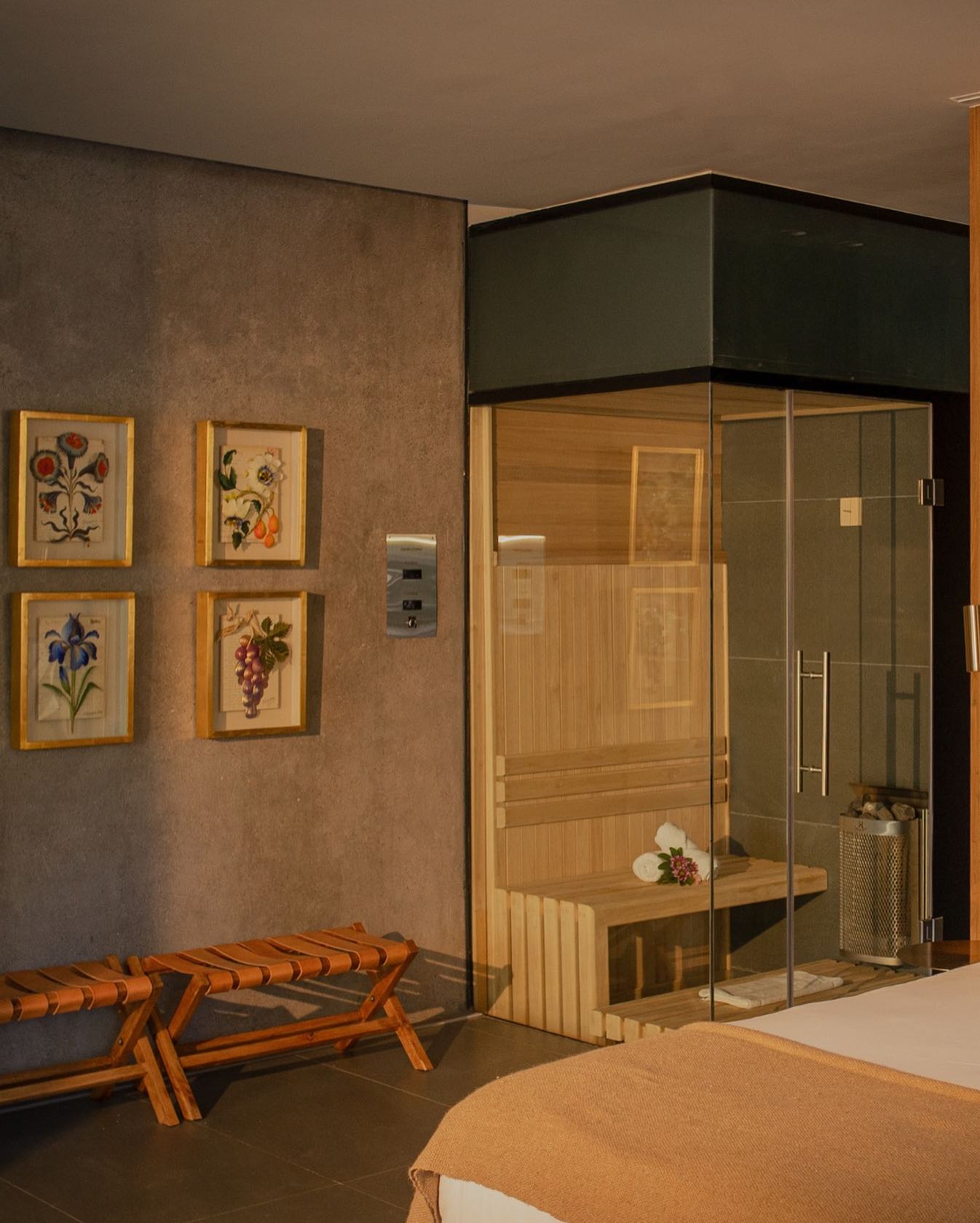
One of the private dry saunas — four of the seven suites have one.
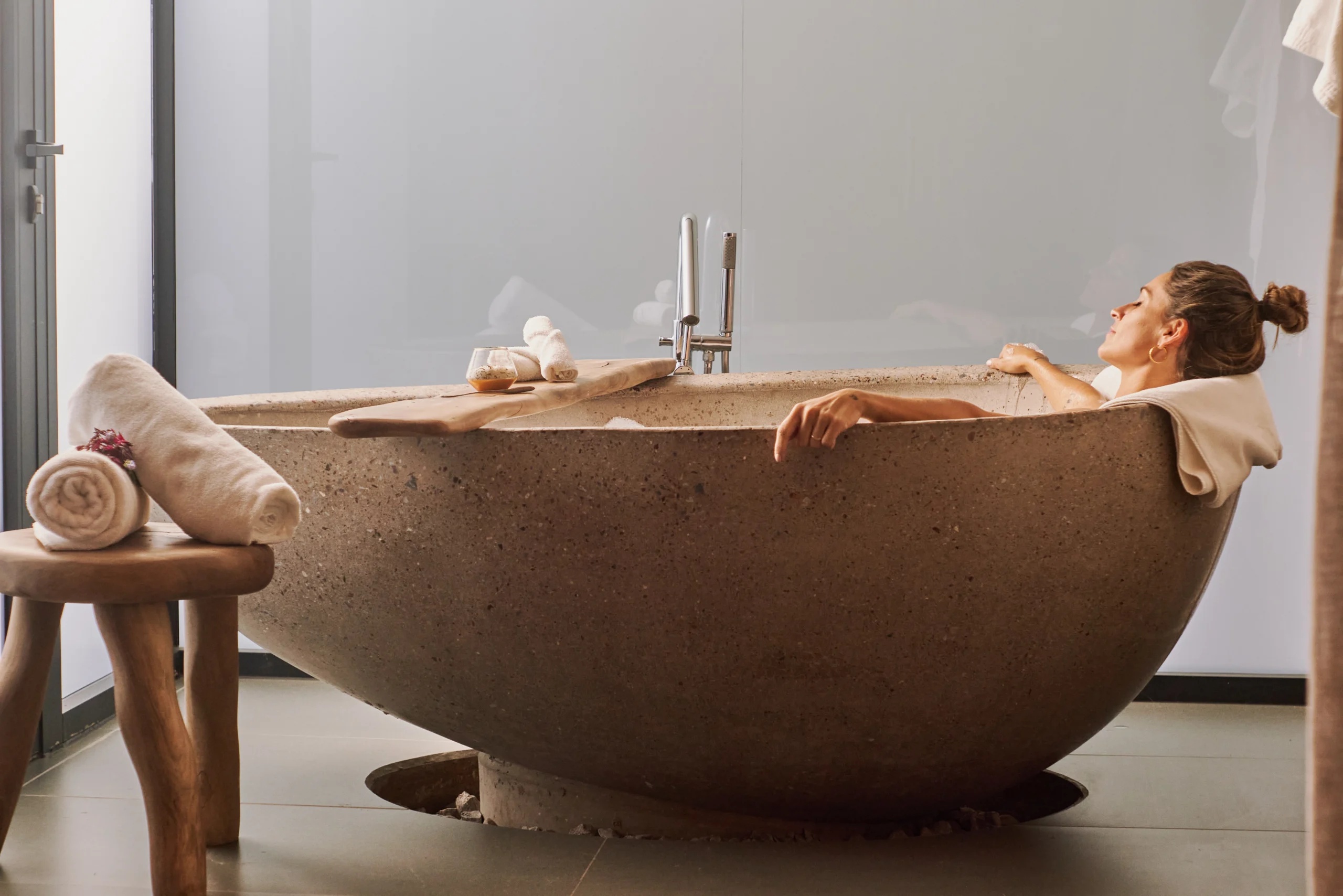
The suite’s soaking tub — cut from the same fermentation eggs used at the winery.
- Wine making expeditions — full-day journeys built around the hotel’s personal relationships, designed around what you’re curious about.
- Private blending sessions — compose your own wine under guidance from the team.
- Winery visits — ten minutes away; during harvest (February–March) you can join the actual picking.
- Cooking classes centred on Argentine ingredients and open-fire technique.
- Horseback riding through working vineyards rather than tourist circuits.
- Excursions into the Andes, from hiking to Aconcagua base camp treks.
- The village itself — Chacras de Coria has art galleries, small wine bars and leafy plazas that reward walking without a plan.
Breakfast is cooked to order every morning and included in the stay. Airport transfers are complimentary in both directions.
Cynthia has spent years working in South America travel, and places like this — with a real story behind them — are exactly what she looks for when she’s planning a trip for someone.